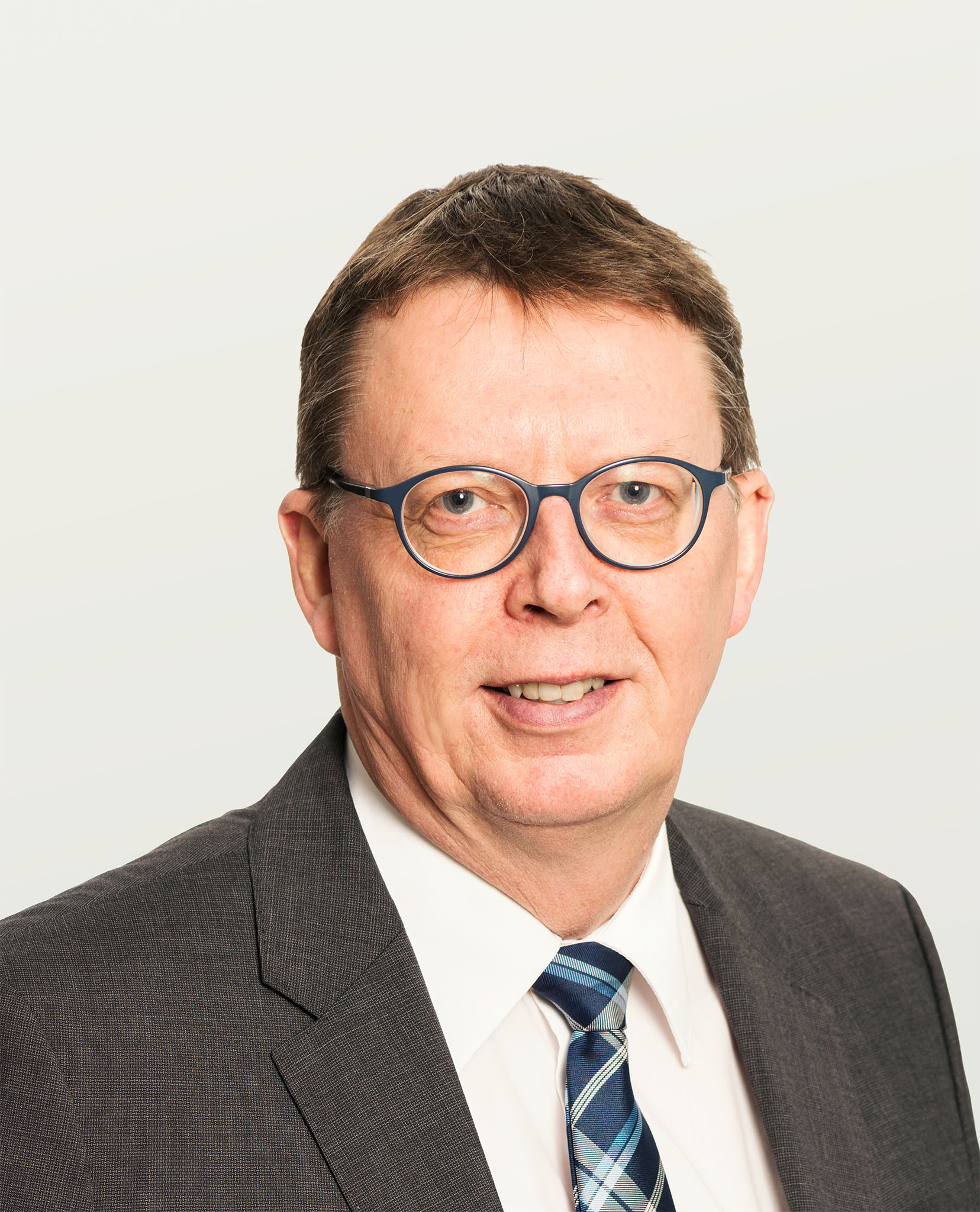
Tarmo Tuominen is a senior leader with four decades of experience in mining and minerals. In this interview he sheds light on his co-operation with Filtrabit and his thoughts on flow-dynamic dust separation technology and its place in the global dust control landscape.
Can you tell us a bit about your background in the mining industry?
“My family has been in the mining industry since the 19th century and I’m the fourth generation in that continuous line. I started my career at the mines some forty odd years ago as a heavy machinery operator before I started studying Geology at Åbo Akademi University. Even in those student days I knew I wanted a career in industry and focused my studies not only on Geology, but also on economics and rock mechanics.
Since then, I’ve held every position between that heavy machinery operator and chairman of the board. The majority of my career I spent at Nordkalk, where I was a part of the management team for almost 20 years.
Six years ago, I left full-time employment and have been focusing on board positions and supporting a number of interesting companies in various ways. I took on an Interim Division President role at Sandvik Mining and got to see a bit more of the mining equipment side of things as well. I’ve also chaired multiple boards like the Norwegian mining company Nordic Mining ASA, the Geological Survey of Finland and the Finnish Mining Association.”
What got you interested in Filtrabit?
“I first learned about Filtrabit when we occupied neighboring stands at the Euro Mine Expo earlier this year, where I was with SolidComp, a laser scanning and digital twin company where I’m a part owner and a board member.
Filtrabit’s innovation immediately caught my attention just for the fact that it was an entirely new category of technology in dust control. I can’t remember seeing completely new approaches in this space for some decades.
Capturing micrometer-scale particulate matter from industrial processes without relying on large surface areas of filter fabrics is a very important development with far-reaching implications. Sure, we’ve had Electrostatic Precipitators for a long time already, but they come with their own set of limitations.”
What aspect of Filtrabit’s innovation did you find most compelling?
“There were really four key advantages that I saw as ground-breaking in some way.
Being able to return separate fractions of the recovered dust is extraordinary. It can unlock value for industrial processes in ways that haven’t even been fully explored yet. Often the finest dust, the micrometer-scale fraction, has completely different properties in how it helps or hinders any given process of reusing the material. Having it in a separate stream is very valuable.
And that the relevant parts are made of metal. The advantage in temperature tolerance is an incredibly important differentiator. Traditional fabric-based filters struggle in that area and it has far-reaching consequences in an industrial setting. Having to cool down gases or to stop production due to a fire in the filter housing are real costs.
The ability to fit the equipment inside a container or even split it to fit into tighter spaces shouldn’t be understated either. Modular and portable are benefits that affect so many areas in these industrial settings. Most facilities in operation are frankly old and already built up to fill every square meter of space they have. And many operations don’t even happen in the same place all the time. I’m thinking of mobile crushers, for example.
Finally, the business model of offering it on an operating lease. Clients are always looking to de-risk any initiative and this is a way to do exactly that. With the maintenance and replacement parts included, you’re taking out a lot of uncertainty. Removing the heavy upfront investment also means that it’s not directly competing for the same available capital as some investment into increasing production.
And come to think of it, I should add a fifth: the fact that it’s an entirely dry process is an especially important advantage in the mining sector specifically. Spraying water to deal with dust has these fundamental flaws that can’t be overcome. Water freezes in cold weather and runs out in dry places, and no engineering advances in nozzles and the like will change that.”
You have recently started co-operating with Filtrabit. Can you describe the nature of that co-operation?
“I suppose you could call it an agent relationship. I do my best to open doors for Filtrabit. Doors that are sufficiently high up that they reach the strategic level, from where I see this innovation reaching its full potential.
Every single company in mining and minerals — and heavy industry in general — has strategic level concerns about Health and Safety, environmental regulations, Social License to Operate etc. that are all affected by particulate pollution and workplace exposure to microparticles. They all have aspirations for circular economy solutions and limiting their net CO2 impact.
However, adopting any new technology carries a level of uncertainty and perceived risk that slows down the decision-making at the operational level. The sentiment behind the famous saying of ‘no one ever got fired for buying IBM’ holds true in a lot of contexts outside of IT as well. I’ve been a plant manager too, and know the feeling of being bombarded with offers to do all sorts of improvements.
But if you have not only permission but a drive that’s coming from the absolute top, it makes things a lot more straightforward. This is precisely the type of area where we want companies stepping outside of convention and running bolder experiments, at least if we expect to see any meaningful progress from the status quo.”
What industries, processes or materials do you think are a good fit for flow-dynamic dust separation technology?
“Filtrabit is already targeting mining and metals manufacturing heavily, and it makes perfect sense. But when I look ahead, I see a lot of opportunities beyond these, too.
Handling of bulk materials is an essential part of so many industries. Even if the output of the industry is a liquid, or a solid for that matter, the ingredients often come in various forms of powders, granules or pellets that create airborne dust as they’re processed and moved around.
And when there are materials or processes that absolutely must remain dry, the fit becomes even more appealing. There are materials like quicklime, for example, that are highly reactive with water and require a dry dust control solution. And entire processes like primary crushing, where sieving is a necessary next step that imposes limitations on how wet the material can be.
I see a lot of potential in chemicals and fertilizers, too. Even glass production consumes a lot of quartz and requires strict pollution controls just for employee safety alone.”
How do you think companies value the recovered material versus the improvements in air quality?
“In my experience, the main motivator for reducing fugitive dust for most industrial companies is the health of their workforce. You simply can’t even recruit or hold onto a workforce unless you address the exposure risk. Then there are the concerns for the local air quality and emissions limits, followed by the more operational benefits like reduced maintenance costs and equipment downtime.
But any time a cost can be turned into a revenue driver, industry has a different level of interest to take action. It can do wonders to align the interests of different departments inside the company. Companies are also turning every stone in order to lower their net CO2 emissions, and reducing the use of virgin resources is a way of doing that. So, the value of recovered material should not be underestimated.”
Can better dust control improve the efficiency of production as a whole?
“Absolutely it can. There is so much inefficiency that results from dust in one way or another.
Employees working directly in production-related processes spend an inordinate amount of time engaged in ad-hoc cleaning of the premises. I’ve experienced this first-hand in those heavy machinery operator days. Often before starting any productive work, you’d have to grab a shovel and get to work on accumulated dust piles that were in the way under conveyors etc.
How many machinery malfunctions and conveyor belt jams are the result of dust accumulation between gears, bearings and such? How many sick days per year can be traced back to compromised respiratory health? And how many careers were cut short as a result?
And what are the hidden costs of using suboptimal dust control solutions like spraying water everywhere? Dealing with the constant corrosion and the sludge itself are real costs and slow down production.
A cleaner working environment lowers costs without a shadow of a doubt. But the tragedy is that it’s very difficult to put a precise number on.”
What changes do you see coming to particulate pollution mitigation in the near future?
“Well, the regulation is only moving in one direction. Both on the level of ambient air and on workplace exposure to microparticles. The regulation is following an increased awareness of the health effects of particulates that comes from the scientific community but also from the demands of the wider population. Social acceptance is much more of a concern than it was in earlier decades.
Management teams and corporate boards are starting to take seriously the existential level risk to the business of simply not being allowed to operate anymore, if they fail to reach these limits that are becoming more strict every year.
The discussion on Best Available Techniques has been going on in earnest for about 15 years now and slowly but surely it’s reaching the legislation that sets the currently binding limits for industry. I see Filtrabit’s innovation as being part of this BAT set of solutions in many application areas.”