2nd Filtrabit unit delivered to SSAB Raahe coke sieving station
The newly delivered Filtrabit unit has the same capacity as the earlier flow-dynamic dust separator working at the very first suction point in the coarse coke sieving station, collecting as much as two tons of coke dust per day.
The newly delivered Filtrabit unit has the same capacity as the earlier flow-dynamic dust separator working at the very first suction point in the coarse coke sieving station, collecting as much as two tons of coke dust per day.
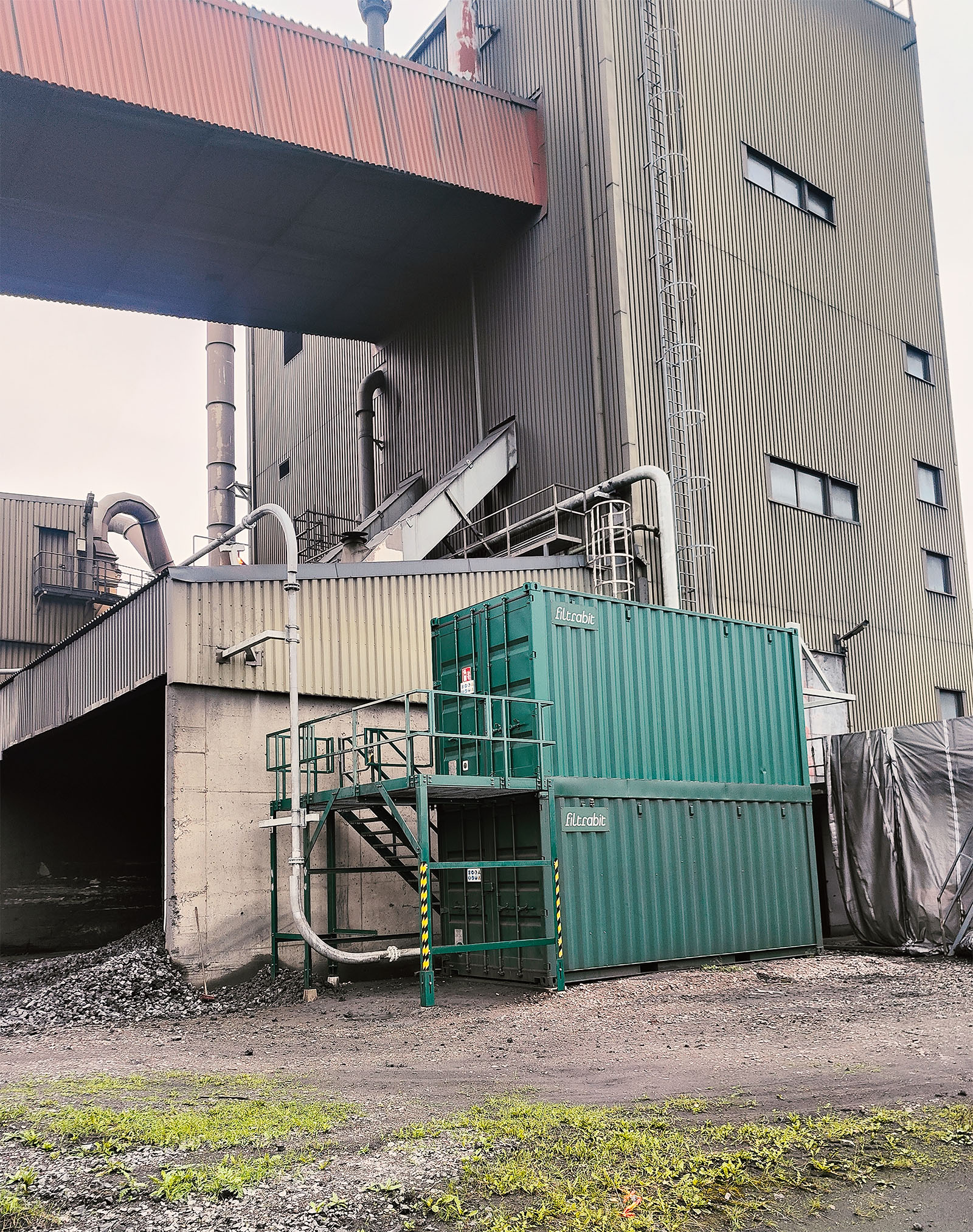
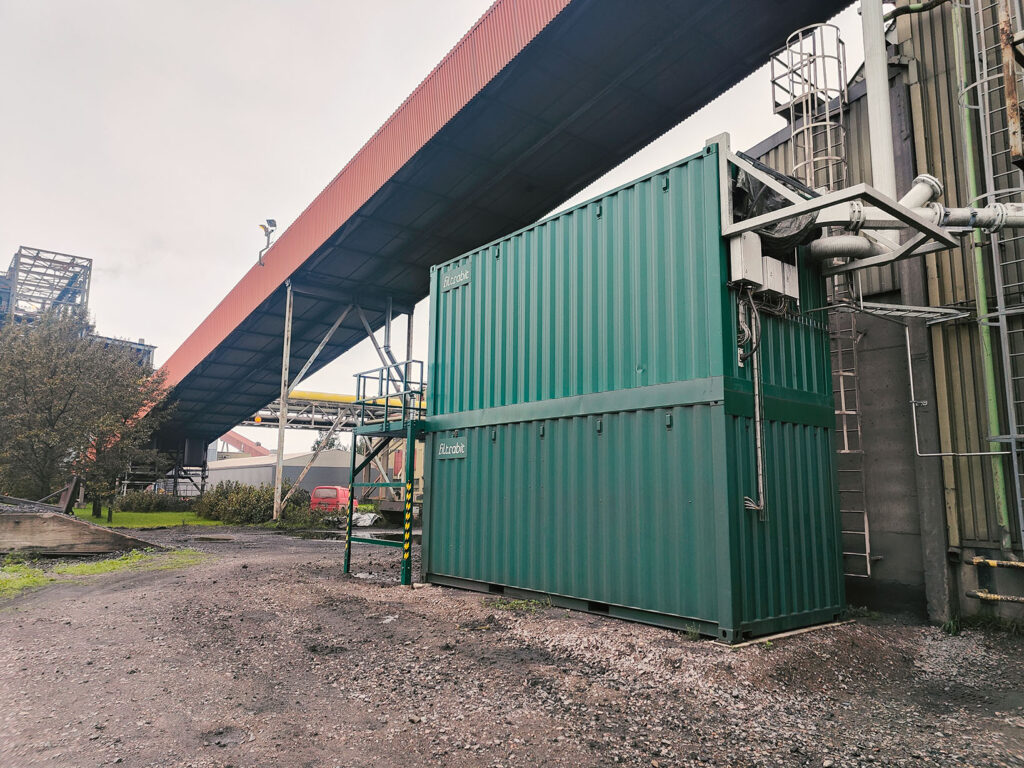
The second unit handles suction points at a later stage in the process, and is situated outside the building in a dual-container setup. Like in the first installation, its cleaned gas outlet connects directly to the 40,000 m3/h baghouse in order to not introduce new emission points.
Filtrabit’s flow-dynamic dust separator at the SSAB Raahe site, installed outside the coarse coke sieving station.
The DC201 system delivered to Raahe has as its material collection module a pneumatic dust conveying system, located in a separate container directly under the container housing of the flow-dynamic dust separator. The pneumatic system sends collected dust directly into a larger dust hopper, from where it can be returned to the process in an uncontaminated state.
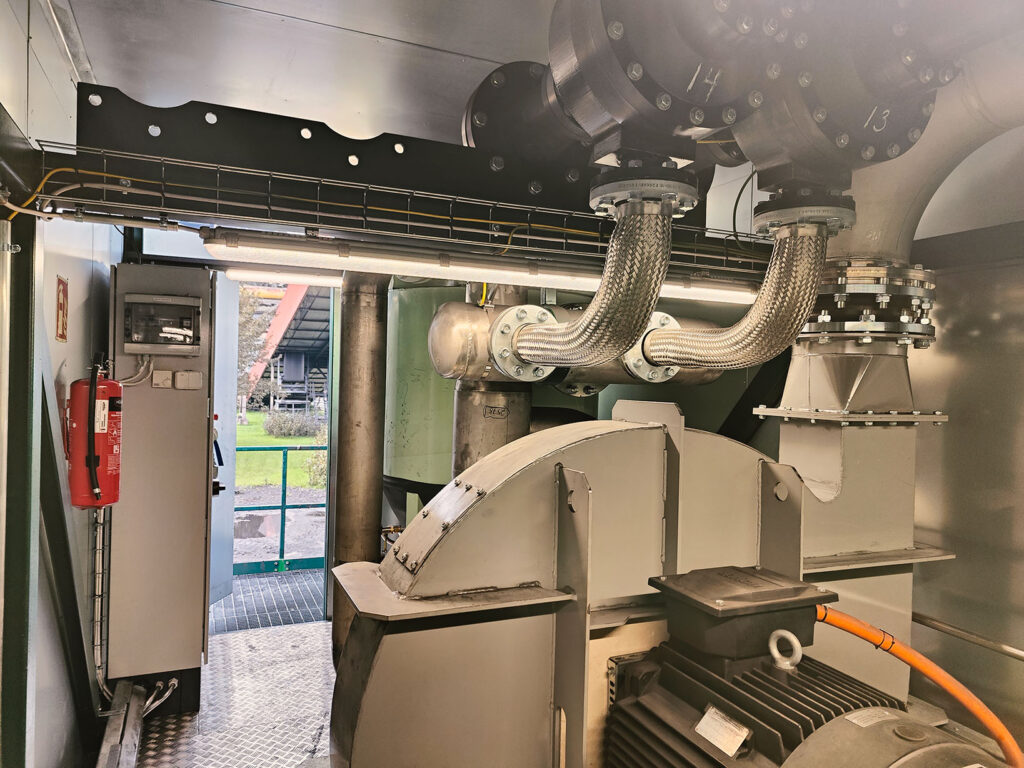
The dual-core DC201 system installed inside the top container.
With the addition of the second unit, the load on the central baghouse filter is further reduced, improving the longevity of the filter bags and making costly maintenance downtime less frequent.
By improving the dust control of the facility as a whole, benefits accrue in working conditions, environmental impact and even in net CO2 emissions. All material collected and returned to the process represents a direct reduction in the virgin resources required for the same production output.
About Filtrabit Filtrabit manufactures industrial-scale dust extraction systems using a revolutionary new technology based on flow dynamics. Filtrabit’s solution effectively extracts microparticles from industrial dust-laden gas streams, which helps reduce air pollutants from industrial sources and accelerate emissions reductions through the reuse of recovered raw materials.